Motorcycle Tires: Pressure, Wear Bars, Date Codes, and When to Replace
Two patches of rubber the size of your palm are all that touch the road. Here's how to check pressure the right way, read the wear bars and the date code, and know when a tire is finished.
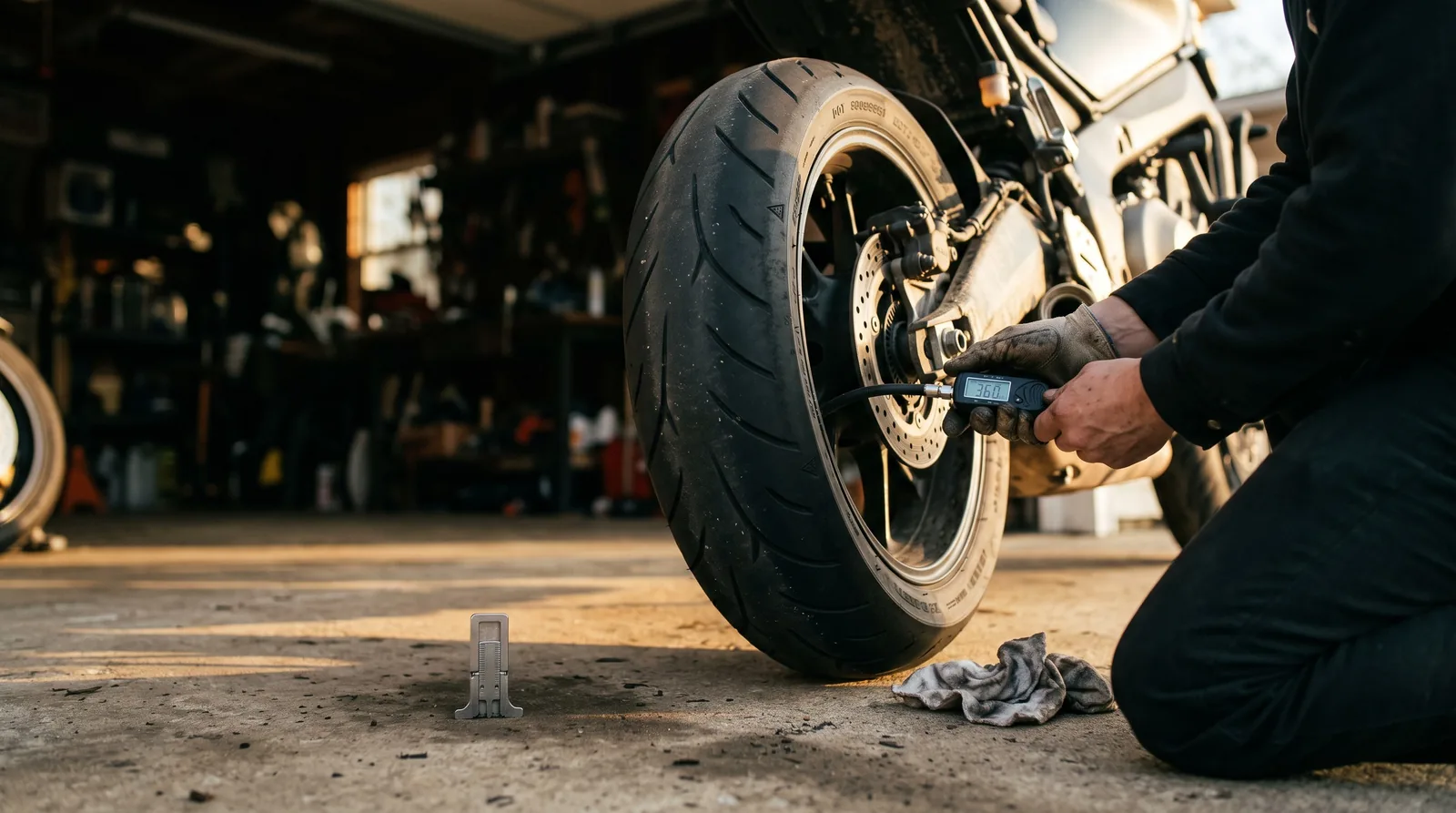
A motorcycle has two contact patches, each about the size of your palm. Everything the bike does, it does through them. Tires are also the part most riders check least, because they look fine right up until they aren't.
Three things tell you where a tire stands: pressure, wear, and age. Five minutes covers all of them.
Pressure: the one that changes weekly
Tires lose about a pound of pressure a month on their own, more in cold weather. A tire that's 6 psi low handles vaguely, heats up, wears the shoulders, and eats fuel. You won't feel 6 psi from the seat. You'll feel it when the front tucks in a corner you've taken a hundred times.
How to check it right:
- Cold. Before riding, or at least three hours after. Riding heats the air inside and raises the reading by several psi, so a tire checked hot reads fine when it's actually low.
- Your own gauge. The ones built into gas station hoses are often wrong by 3–5 psi. A decent digital or dial gauge costs little and lives in the tank bag.
- The bike's number, not the tire's. The pressure printed on the tire sidewall is the maximum, not the target. The correct riding pressure is on a sticker on the swingarm, under the seat, or in the manual. It's usually in the mid-30s front and high-30s to low-40s rear for a street bike, higher with a passenger or luggage.
- Weekly. Or before every ride if the bike sits. It takes a minute, and it's the single most effective thing you can do for how the bike handles.
Log the pressures you set. If one tire needs air every week and the other doesn't, you've found a slow leak before it finds you.
Wear: tread, bars, and shape
Wear bars. Small raised blocks molded into the grooves of the tread, marked on the sidewall by a tiny triangle or "TWI." When the tread wears down level with the bars, the tire is at its legal limit, about 1.6 mm (2/32"). In practice, a motorcycle tire is done well before that: wet grip falls off sharply under 2–3 mm.
Measuring. A tread depth gauge is a few dollars. Check the center of the rear tire, where it wears fastest, and the shoulders of the front.
Shape matters as much as depth. Look at the profile from behind:
- Squared-off rear. A flat center with rounded edges, from highway miles. The bike feels like it falls into corners and stands up mid-turn. Still legal, but the tire's done being a motorcycle tire.
- Cupping or scalloping on the front. Uneven, wavy wear around the circumference, often from worn suspension or chronic underinflation. Causes a hum or vibration that gets louder with speed. Fix the cause before the next tire or it'll do it again.
- Flat spot. From sitting in one place over a winter, or a locked-wheel skid. Sometimes rides out, often doesn't.
- Wear on one side only. Alignment or a bent wheel.
Damage. Run your hand around the whole tread and both sidewalls. You're feeling for cuts, bulges, embedded nails or glass, and cracking in the sidewall grooves. A bulge is a broken cord; replace the tire regardless of anything else.
Age: the one riders forget
Rubber hardens with time whether or not it's ridden. An old tire with plenty of tread grips like a hockey puck, especially cold and wet. This is the tire that surprises people on bikes that sat.
Reading the date code. On the sidewall, find the DOT code, a string of letters and numbers. The last four digits are the week and year of manufacture. 2319 means the 23rd week of 2019. Sometimes the code is only on one side of the tire, so check both.
How old is too old?
| Age | What to do |
|---|---|
| Under 5 years | Normal. Judge by wear. |
| 5–6 years | Inspect carefully for sidewall cracking. Plan replacement. |
| 7 years or more | Replace, whatever the tread looks like. Most manufacturers say so, and the rubber agrees. |
When you buy tires, check the date code before they're mounted. A "new" tire that's been on the shop's shelf for three years has already used up part of its life.
When to replace
Replace a tire when any one of these is true:
- Tread is at the wear bars, or under about 2 mm at the center
- Sidewall cracking, a bulge, a cut to the cords, or a plug in the sidewall
- Seven years old, or five with visible cracking
- Profile is squared or cupped enough to change how the bike handles
- More than one plug in the tread
Replacing front and rear together isn't required, but mismatched profiles (a new front with a squared rear, or vice versa) handle oddly. Many riders run two rears to one front, which is a reasonable rhythm on a street bike.
New tires: the first fifty miles
Fresh tires are slippery. Mold release agents on the surface and a brand-new, unscuffed profile both reduce grip for the first stretch. Ride gently for the first 50–100 miles, lean the bike over gradually, and avoid hard braking. Check the pressure again after the first ride; new tires sometimes seat and lose a little.
Log the install date, the brand and model, the date code, and the mileage. Two sets later, you'll know exactly what a tire costs you per mile and which one actually lasted.
What to log
- Pressures set, with date (weekly, or whenever you adjust)
- Tread depth, center and shoulders, every oil change
- Date codes for the tires currently on the bike
- Install mileage and brand for each new set
- Any cupping, flat spot, or vibration you noticed
Tires sit alongside the brake check in any service, and the pre-ride inspection starts with them for a reason: T for tires.
Common questions
Can I use the pressure on the sidewall?
No. That's the maximum the tire is rated for, not the pressure to ride at. Use the bike manufacturer's figure. The sidewall maximum is useful for one thing: inflating a tire for winter storage so it doesn't flat-spot.
Can a motorcycle tire be plugged?
A single plug in the center of the tread, done properly, is widely considered a get-home or limited-life repair; many shops won't do it at all, and tire makers don't endorse it. Never plug a sidewall. If you plug a tire, keep speeds moderate and replace it soon.
Why does my front tire hum?
Almost always cupping. Check the pressure history (underinflation is the usual cause) and have the fork oil and steering head bearings looked at before the next tire goes on.
Do dual-sport and dirt tires follow the same rules?
Pressure is more variable off-road and riders deliberately run lower for traction, but the age limits, the damage checks, and "check it cold with your own gauge" all apply.
Keep reading
 Maintenance & Repairs · 5 min
Motorcycle Brake Inspection at Home: Pads, Fluid, Rotors, and When to Replace
Brakes wear slowly enough that you stop noticing. A ten-minute check with a flashlight tells you what's left, what the fluid's doing, and wh
 Maintenance & Repairs · 5 min
Motorcycle Battery Maintenance: Tenders, Voltage, and How Long One Lasts
The battery is the part that fails on the first ride of the season. Here's what the voltage numbers mean, which charger to use, how to store
 Maintenance & Repairs · 6 min
How to Winterize a Motorcycle: The Checklist That Wakes Up Ready
Fuel, battery, tires, chain, fluids, cover. Nine steps, an afternoon's work, and a machine that starts on the first warm Saturday instead of