
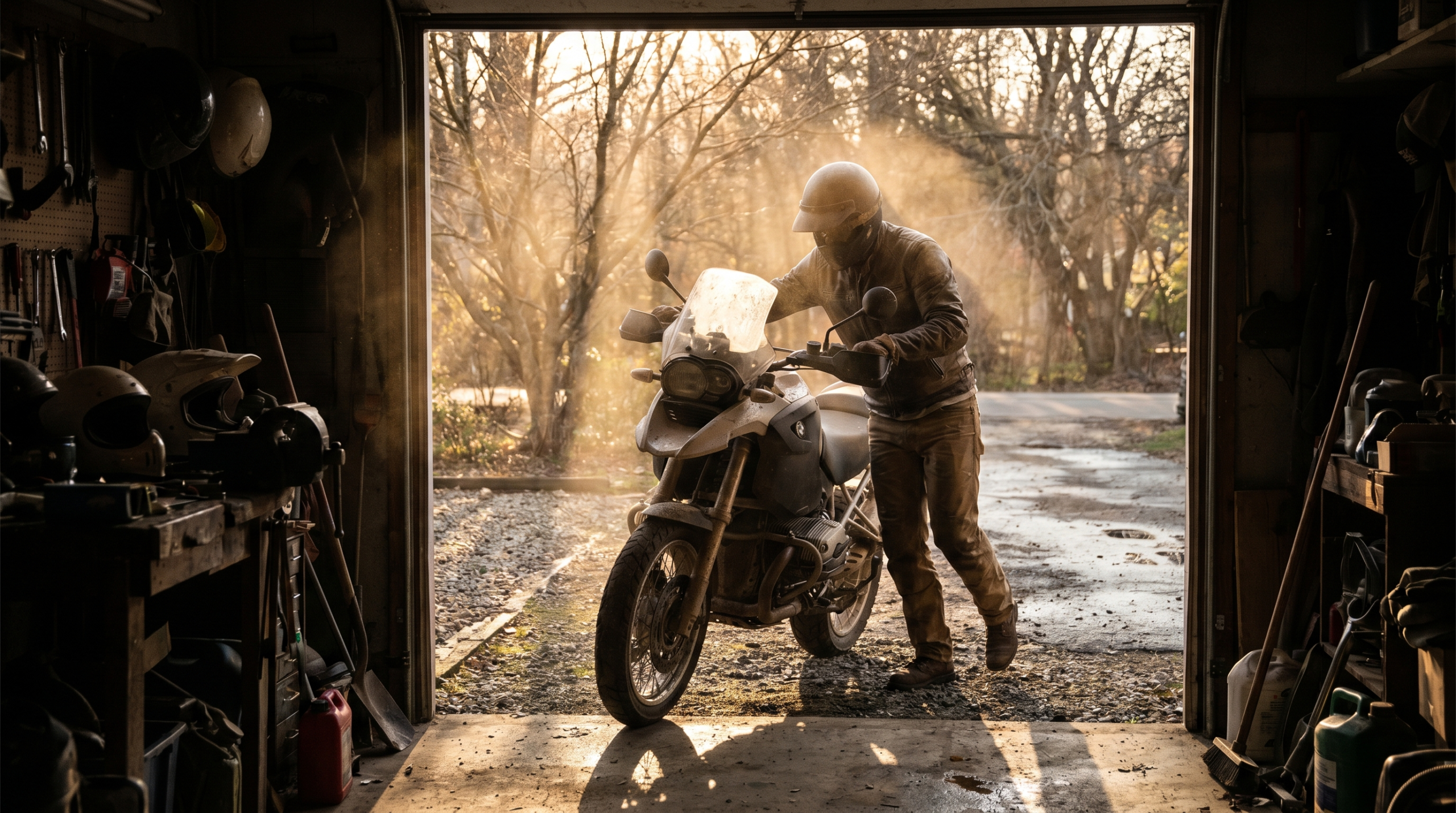
Spring Motorcycle Maintenance: What to Check After Winter Storage
The bike has been sitting since October. Maybe November if you pushed it. Now it’s May, the weather is good, and you want to ride. The question is whether your machine is actually ready — or whether you’re about to find out it isn’t somewhere inconvenient.
Here’s what actually needs to be checked after winter storage, in order of importance. No filler, no obvious advice about checking if the key turns.
Battery
Start here because everything else depends on it. If you stored without a battery tender, your battery has been slowly self-discharging for months. A lead-acid or AGM battery stored below roughly 12.4V risks sulfation — a chemical process that permanently reduces capacity.
What to do: Put it on a smart charger/maintainer (CTEK, Battery Tender, etc.) and let it fully charge before testing. After a full charge, check the voltage under no load: 12.6V+ is healthy, 12.4V is borderline, below 12.2V and you’re looking at a battery that may fail mid-season. A load test at an auto parts store will tell you definitively whether it holds capacity under actual use.
If the battery is 3+ years old and reading low, replace it now rather than in August on the side of a highway.
Fuel System
Ethanol-blended fuel (E10, what most of us pump) degrades in as little as 30 days. Fuel that sat all winter has phase-separated and can leave varnish deposits in carburetors or fuel injectors.
If you added fuel stabilizer before storage: You’re probably fine. Run the old fuel through the first tank, then fill with fresh.
If you didn’t stabilize: This is where it gets real. Drain the tank and the float bowl (carbureted bikes) if possible. Add fresh fuel. On fuel-injected bikes, a tank drain and fresh fuel is usually sufficient. If the bike runs rough, stumbles at idle, or won’t idle cleanly, a carb clean or fuel injector service is the likely fix.
Also check: fuel lines for cracking or hardening, petcock for proper operation, fuel filter if your bike has an in-line replaceable one.
Tires
Tires lose roughly 1 PSI per month during storage — sometimes more in cold temperatures. A tire that was at proper pressure in October could be 5–7 PSI low in May.
What to do: Check cold pressure against your bike’s spec before riding. Not the tire sidewall max — the manufacturer’s recommended pressure on the placard or in the manual.
Then look at the tires carefully. Look for flat spotting (tires that sat in one position for months can develop a flat spot that shows up as a vibration for the first few miles — usually resolves, but worth noting). Look for cracking in the sidewalls, especially on any tire over 5 years old regardless of tread depth. Look for embedded objects that worked their way in during fall riding.
Tread depth: if you were marginal last fall, you’re beyond marginal now. Don’t try to get one more season out of a tire that should have been replaced six months ago.
Brakes
Brake rotors develop a surface rust layer during storage. This is normal and will scrub off within the first few stops — but don’t test your brakes at speed until you’ve done a few slow, deliberate stops from 15–20 mph to clear the surface rust.
Check brake fluid level in both master cylinders. Low fluid can indicate worn pads (as pads wear, the caliper pistons extend further and the fluid level drops) or a small leak. If it’s low with new-looking pads, investigate before riding.
Check brake pad thickness. Get eyes on the pads — most calipers allow a visual inspection without full disassembly. If the friction material is at or near the wear indicator groove, replace them now.
Check brake fluid condition. Brake fluid is hygroscopic — it absorbs moisture from the air. Dark fluid is old fluid. If you haven’t changed it in two years, change it now. Degraded brake fluid has a lower boiling point and can vaporize under heavy braking, causing brake fade at exactly the wrong moment.
Fluids
Engine oil: If you changed the oil before storage (which you should have — used oil contains acids that degrade engine components over a winter), you’re probably fine for a season. If you didn’t, change it now before the first ride. Old oil is cheap to fix. Engine damage from old oil is not.
Coolant (liquid-cooled bikes): Check the reservoir level. Look for any signs of contamination — oily sheen on coolant or milky oil on the dipstick can indicate a head gasket leak. Coolant itself should be replaced every 2 years regardless of level.
Chain (chain drive bikes): A chain that sat dry for months is ready to be lubricated. Clean it with chain cleaner, let it dry, then apply fresh chain lube. While you’re there, check tension against your manual spec and adjust if needed.
Controls and Cables
Work the throttle through its range — it should open and snap back cleanly. If it feels stiff, sticky, or slow to return, the cable may need lubrication or there’s a routing issue that got worse over winter.
Check clutch lever freeplay and feel. Pull it in and release it slowly — it should engage smoothly without sticking.
Look at exposed cable ends for fraying or corrosion, especially at the lever end and where the cable enters the housing.
Lights and Electrics
Five minutes: headlight (high and low), tail light, both turn signals, brake light (test with both front lever and rear pedal), horn. Any bulb that burned out over winter gets replaced before you ride.
Log It Before You Ride
The spring check-out is a natural moment to start or update your service log. Every item you just inspected — tire pressure and condition, brake pad depth, fluid levels, chain tension — can be logged in Moto Frontier against your bike’s record.
When you do the same check next spring, you’ll have last year’s numbers as a baseline. That’s how you catch a tire that’s worn more than expected, or brake fluid that’s due sooner than the calendar suggests. The log makes the machine’s condition visible over time — not just a snapshot of where it is right now.
Your bike has been waiting all winter. Make sure it’s ready before you ride.
Log your spring check-out and track your bike’s health free at Moto Frontier →