
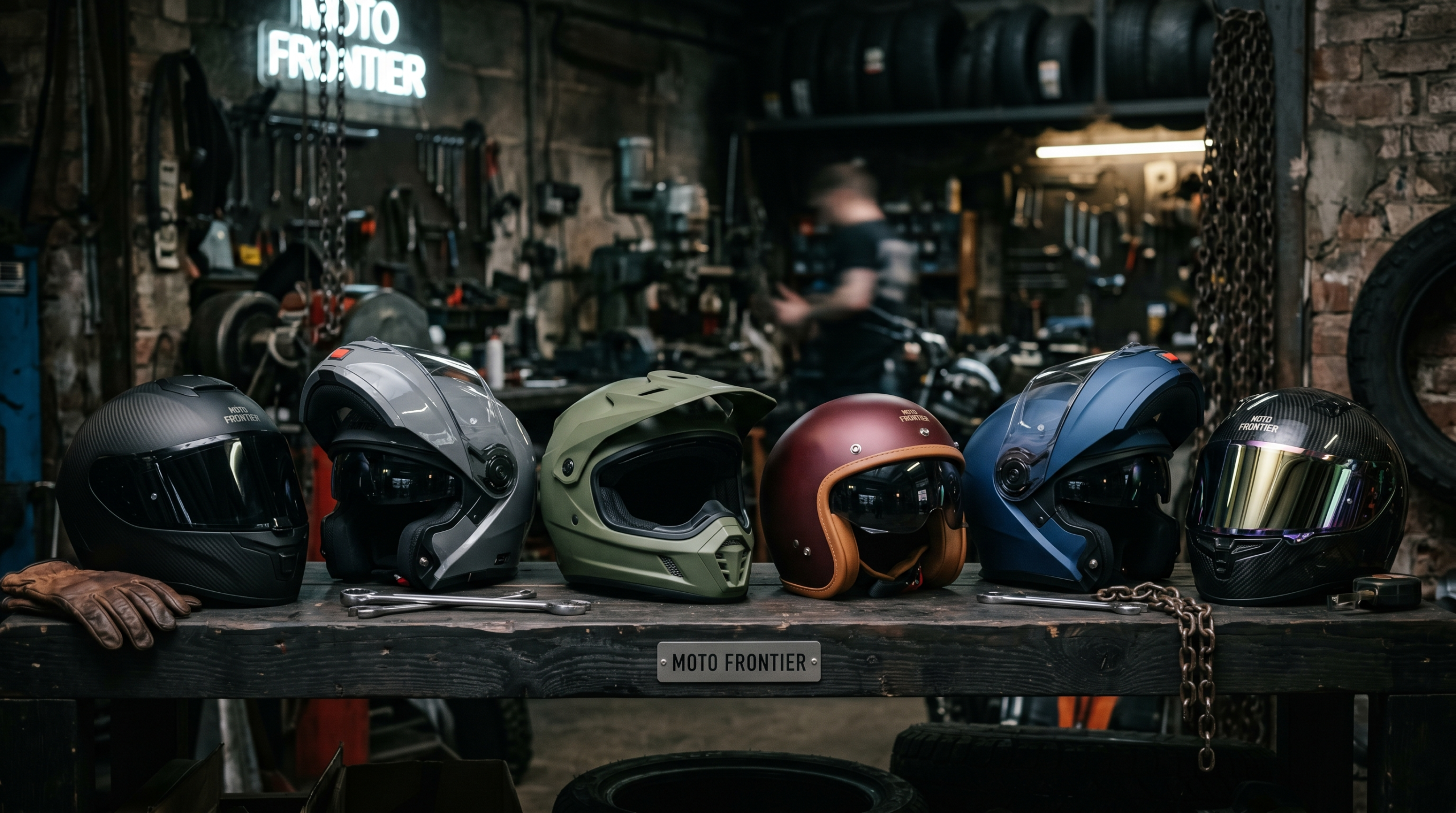
How to Choose a Motorcycle Helmet: A No-BS Buying Guide
Motorcycle helmet marketing is relentless. Every brand claims theirs is the safest, lightest, most aerodynamic lid on the market. Walk into any gear shop and you’ll drown in acronyms — MIPS, ECE 22.06, SNELL, DOT, SHARP ratings, modular vs. full-face, the list never ends.
Here’s what you actually need to know to buy a helmet that protects your head without wasting money on things that don’t matter.
Start With Fit — Not Brand, Not Price
A $600 helmet that doesn’t fit properly is less safe than a $200 helmet that fits perfectly. This is not a sales pitch. It’s physics. A helmet that moves on impact transfers energy wrong, misses key contact zones, or flies off entirely.
Head shapes fall into three main categories: round oval, intermediate oval (the most common), and long oval. Try on helmets in-store whenever you can. The helmet should sit level on your head, contact the crown, and require effort to remove without the buckle undone.
The fit test:
- Put the helmet on and fasten the strap
- Grab the helmet and try to rotate it side to side, and forward off your head
- It should move minimally — cheek pads grip, no pressure points at the temples
- Some tightness is normal — foam breaks in within 15–20 hours of riding
Safety Ratings: What They Mean and Which One to Trust
Every helmet sold in the US must meet DOT (FMVSS 218). That’s the floor, not the ceiling. DOT is self-certified — manufacturers test their own lids and apply the sticker. It’s better than nothing, but it’s the minimum.
The ratings worth paying attention to:
ECE 22.06 — The European standard, widely considered the most rigorous currently in use. Third-party tested. If a helmet has ECE 22.06 certification, it’s a meaningful signal.
SNELL M2020 — Strict independent standard, updated every five years. Overkill for most street riders, but common in track helmets. Adds cost and sometimes weight.
SHARP (UK database) — Independent government-run database that tests real production helmets from store shelves and publishes 1–5 star ratings. One of the most useful consumer resources available.
MIPS — Not a certification, but a rotational impact liner technology. Reduces rotational forces in angled impacts. Worth having if budget allows, but it’s not a substitute for proper fit and a legitimate safety rating.
Helmet Styles: What You’re Actually Trading Off
Full-face — Most protection. Covers chin bar (chin/jaw injuries account for roughly half of all helmet impacts). Slightly more wind noise at speed. Best overall choice for street riding.
Modular/flip-up — Full-face convenience with a chin bar that flips up. Popular for touring. The hinge point is a structural weak spot — look for SNELL or ECE 22.06 rated modular helmets specifically, as many cheap modulars don’t hold up in chin-bar tests.
Open face (3/4) — Zero chin protection. Good for low-speed urban riding if you’re honest about what you’re doing. Don’t wear one on a highway and tell yourself you’re protected.
Half helmet/brain bucket — Legal in many states. Protects almost nothing useful in a real crash. If you’re wearing one, own the choice instead of calling it safety gear.
What to Spend
Spend $200–$400 and you can get a legitimately safe, well-rated helmet from Shoei, Arai, Bell, HJC, or Scorpion. Above $400, you’re mostly paying for weight reduction, noise damping, premium liner materials, and fit precision — real advantages for daily riders, not necessary for everyone.
Below $150, you’re gambling. Some budget helmets pass DOT. Many don’t perform well in independent testing. The SHARP database will tell you what you need to know — look up any helmet before you buy it.
Replace It After a Crash — Even a Drop
EPS foam is a single-impact material. It compresses to absorb energy and doesn’t recover. A helmet that’s been dropped off a counter at highway helmet height may look fine and be compromised internally. Replace your helmet after any significant impact. A cracked outer shell or a crash is an automatic replacement.
Also replace helmets every 5–7 years regardless of visible condition. The EPS ages, the liner degrades from sweat and UV, and newer helmets are simply better engineered than older ones.
Track Your Gear in Moto Frontier
Your helmet has a manufacture date printed on the liner — most riders never look at it. Moto Frontier lets you log your gear alongside your bike, so you know when that helmet was bought, how many miles it’s been through, and when it’s time to replace it. Keep your head covered by actual data instead of a guess.