
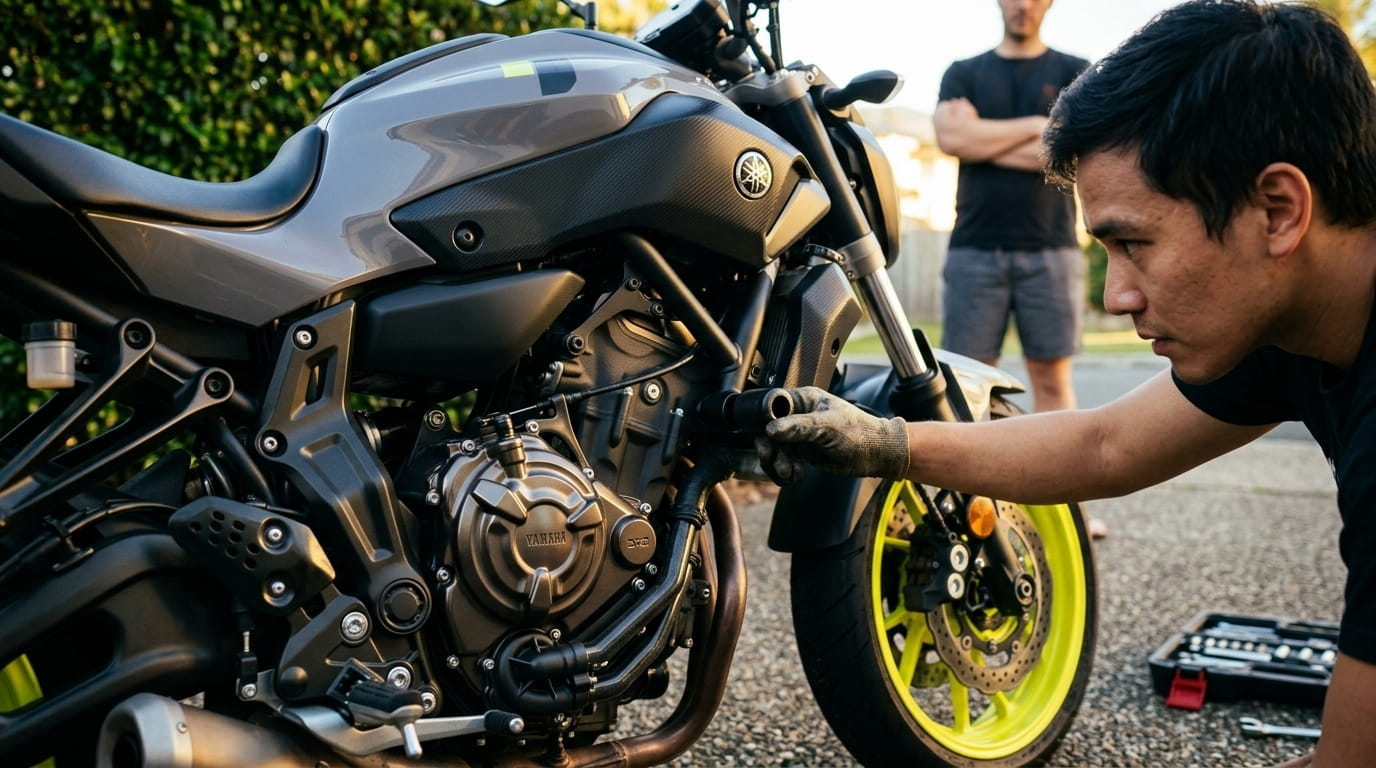
The used motorcycle market is full of great deals and a fair number of disasters. The difference between them usually comes down to how carefully you inspect before you buy.
This guide will help you walk into any private sale or dealer lot knowing exactly what to look for, what to ask, and when to walk away.
Before You Even See the Bike
Run the VIN
Get the VIN from the seller before meeting. Run it through the NHTSA database (free) to check for open recalls, and consider a service like Cyclevin or VINAudit for a full history report. You want to know about prior accidents, title status, and ownership history before you invest travel time.
Ask the Right Questions
- Why are you selling it?
- How long have you owned it?
- Any accidents or tip-overs?
- What maintenance has been done recently?
- Do you have service records?
A seller who gets defensive about basic questions is telling you something.
The In-Person Inspection
Look at the Bike Cold
Insist on seeing the bike cold (not warmed up). A difficult-to-start cold engine is a red flag. A seller who “already warmed it up for you” may be hiding a hard-start problem.
Check the Frame and Chassis
- Look at the frame around the head tube, swingarm pivot, and engine mount points for cracks, welds, or paint that looks “touched up”
- Check that the handlebars are straight and centered — bent bars indicate a frontal impact
- Look down the fork tubes for bends, scratches deep enough to feel, or signs of a seal leak (oil residue on the lower tubes)
Check for Crash Damage
Most bikes get dropped at some point. A simple tip-over in a parking lot leaves minor cosmetic marks. A real crash leaves different evidence:
- Deep gouges on engine cases, frame sliders, or exhaust pipes
- Bent levers or controls
- Mismatched paint or fresh paint on one side only
- Asymmetric wear on footpegs, mirrors, or bodywork
Check the Tires
Look at tread depth and even wear. Cupping (scalloped pattern) indicates worn suspension. One-sided wear may indicate improper alignment or a bent wheel. Tires are $200–$400 to replace — factor that into your offer.
Check the Chain and Sprockets
A stretched, rusty, or poorly adjusted chain on a relatively low-mileage bike tells you the owner deferred maintenance. Check the sprocket teeth — they should be symmetrical, not hooked or shark-finned.
Engine Inspection
- Look for oil leaks around gaskets, drain plug, and valve cover
- Check the oil on the dipstick or sight glass — should be amber to brown, not black or milky
- Listen for top-end ticking, bottom-end rumbling, or any unusual noises when running
- Excessive white smoke on startup can indicate burning coolant
- Blue smoke indicates burning oil
Test All Electrics
Lights, signals, horn, dash cluster, ignition. Non-working electrics are easy to overlook and can be expensive to trace and fix.
The Test Ride
If you’re a licensed rider, always request a test ride (or bring someone who can). Listen and feel for:
- Smooth, positive gear changes with no false neutrals
- Clutch engagement that’s not slipping under load
- Brakes that stop straight without pulling
- Suspension that absorbs bumps without bottoming harshly
- Throttle that responds cleanly without hanging
The Title Check
A clean title is non-negotiable. Verify the VIN on the title matches the VIN on the frame and engine. Make sure the seller’s name matches the title. Salvage and rebuilt titles aren’t automatically deal-breakers, but they affect insurance and resale value significantly — price accordingly.
Negotiating
Any deferred maintenance you find is a negotiating point. New tires? Subtract $300. Chain and sprockets needed? Subtract $250. Be specific and reasonable, not aggressive. Know what the bike is worth — check Cycle Trader, NADA, and recent sold listings on Facebook Marketplace.
Track It From the Start
Once you buy, get your bike into Moto Frontier immediately. Log the purchase mileage, known history, and anything the seller told you about recent maintenance. Start building your own record from day one. A well-documented bike is worth significantly more when you sell it.
Buy smart. Ride confidently. Know your machine.